
Why that bargain-basement premium might be the most expensive mistake you’ll ever make
The Siren Call of Low Premiums
You’re scrolling through health insurance options online, comparing plans like you’re shopping for the best deal on a new laptop. One plan jumps out with a premium so low it seems almost too good to be true. Your finger hovers over the “Select Plan” button, and that little voice in your head whispers, “This is it – I found the perfect deal!”
But here’s what most people under 65 don’t realize until it’s too late: that “amazing deal” might actually be a financial trap waiting to spring.
For self-employed professionals, gig workers, and anyone navigating the complex world of individual health insurance, the temptation to choose the cheapest option is understandable. When you’re managing your own healthcare costs without employer subsidies, every dollar counts. But cheap insurance often comes with hidden costs that can devastate your finances when you need coverage most.
When “Affordable” Becomes Expensive
The Deductible Disaster
Many budget-friendly health plans lure customers in with low monthly premiums, then hit them with sky-high deductibles. These plans essentially function as catastrophic coverage – you’re paying monthly for the privilege of paying thousands out-of-pocket before your insurance kicks in.
For someone earning a moderate income as a freelancer or small business owner, a plan with an extremely high deductible can mean:
• Avoiding necessary medical care because you can’t afford the upfront costs
• Delaying preventive treatments that could catch serious conditions early
• Facing financial ruin if a medical emergency strikes before you’ve met your deductible
The Network Nightmare
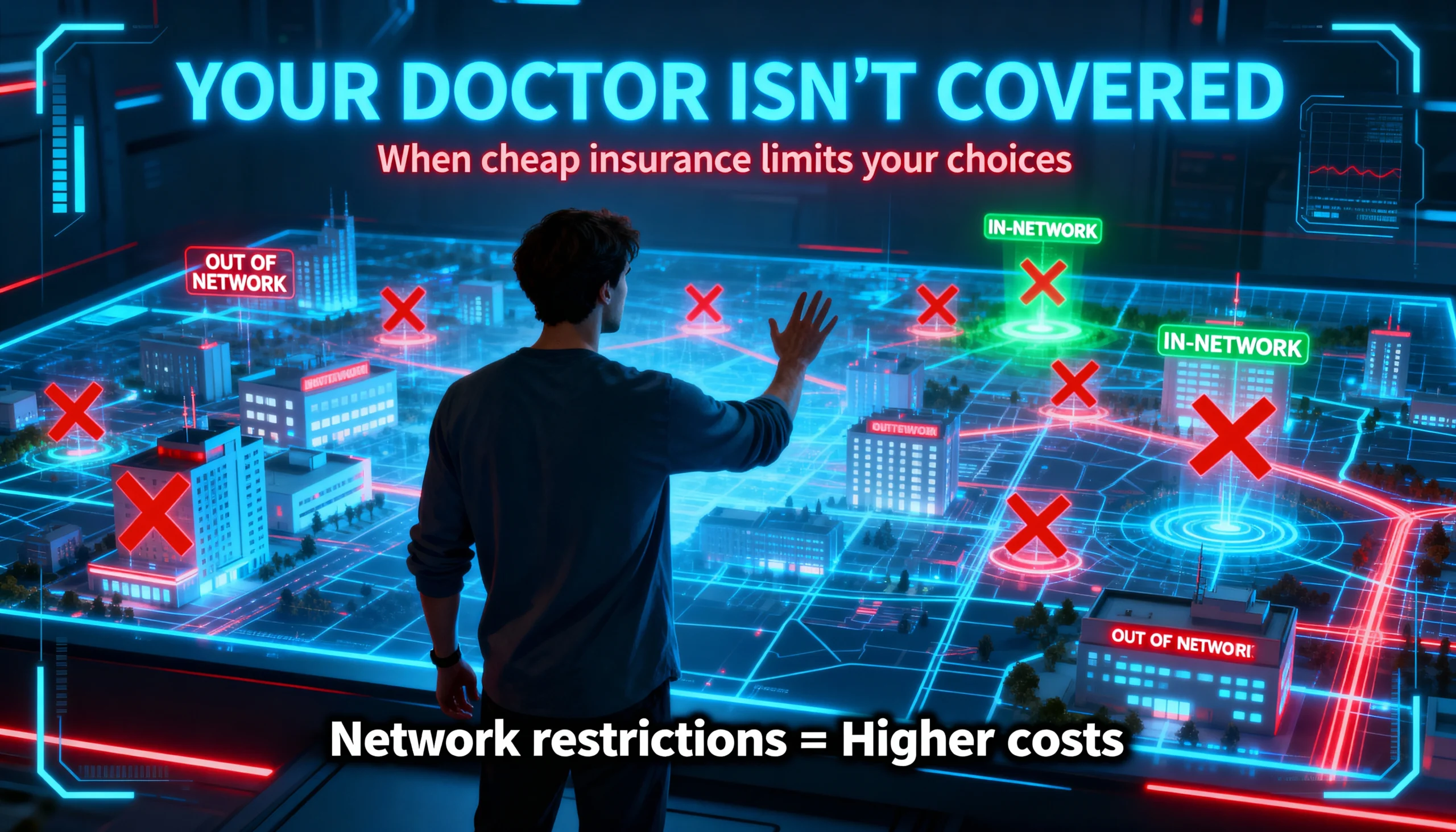
Cheap plans often come with severely limited provider networks. That family doctor you’ve trusted for years? Not covered. The specialist who’s been managing your chronic condition? Out-of-network. The hospital closest to your home? You’ll pay full price if you end up there.
This network limitation creates a cascade of problems:
• Disrupted continuity of care with trusted healthcare providers
• Higher out-of-pocket costs for out-of-network services
• Geographic limitations that could leave you stranded during travel emergencies
• Longer wait times for appointments with in-network providers
The Coverage Gap Trap
Budget insurance plans frequently exclude coverage for services that many people assume are standard. Mental health services, prescription medications, maternity care, or specialized treatments might be completely excluded or severely limited.

Seeing The Real Consequences
When Savings Turn Into Financial Catastrophe
Consider what happens when someone with a “cheap” health plan faces a real medical crisis. That low monthly premium suddenly feels meaningless when they’re staring at:
• Massive hospital bills that their plan barely touches
• Prescription costs that eat up their entire monthly budget
• Specialist fees that force them to choose between treatment and rent
• Emergency room visits that result in surprise bills worth thousands
The Stress Multiplier Effect
The anxiety of having inadequate coverage creates its own health problems. People with cheap, inadequate insurance often experience:
• Chronic stress about potential medical costs
• Delayed medical care that allows minor issues to become major problems
• Financial anxiety that impacts mental health and relationships
• Career limitations due to fear of losing even minimal coverage
The False Economy Reality
What seems like smart budgeting often becomes the opposite. People who choose cheap insurance frequently end up paying more overall because they:
• Avoid preventive care that could prevent expensive treatments later
• Pay full price for services not covered by their bare-bones plan
• Face surprise medical bills that destroy their financial stability
• Miss out on subsidies available through ACA marketplace plans
Smart Coverage Strategies
Understanding True Value in Health Insurance
The key isn’t finding the cheapest plan – it’s finding the plan that offers the best value for your specific situation. This means looking beyond the monthly premium to understand:
Total Cost of Ownership
• Monthly premiums plus potential out-of-pocket costs
• Deductible amounts and how quickly you might reach them
• Copayment structures for services you actually use
• Maximum out-of-pocket limits that protect you from catastrophic costs
Coverage Quality Assessment
• Provider network size and quality in your area
• Prescription drug coverage for medications you take
• Essential health benefits that match your needs
• Preventive care coverage that keeps you healthy

The ACA Advantage for Under-65 Individuals
Many people don’t realize they might qualify for significant subsidies through ACA marketplace plans. These subsidies can make comprehensive coverage surprisingly affordable, especially for:
• Self-employed individuals with variable income
• Gig workers who don’t receive employer benefits
• Early retirees bridging the gap to Medicare
• Small business owners who need individual coverage
Strategic Plan Selection
Smart health insurance shopping involves:
Assessing Your Real Needs
• Current health status and ongoing medical needs
• Prescription medications you take regularly
• Preferred doctors and hospitals you want to keep
• Likelihood of needing specialized care
Calculating Total Costs
• Comparing plans based on total annual costs, not just premiums
• Factoring in your typical healthcare usage patterns
• Understanding worst-case scenario costs
• Evaluating the value of preventive care coverage
Timing Your Enrollment
• Taking advantage of open enrollment periods
• Understanding special enrollment opportunities
• Avoiding gaps in coverage that could be costly
Making the Right Choice for Your Future
The health insurance decision you make today will impact your financial security and peace of mind for the entire year ahead. While it’s natural to want to minimize monthly expenses, especially when managing your own healthcare costs, the cheapest option rarely provides the best protection.
Instead of asking “What’s the lowest premium I can find?” the better question is “What’s the best value I can get for comprehensive protection?” This shift in thinking can save you from financial disaster while ensuring you get the healthcare you need when you need it.
Remember, health insurance isn’t just about managing costs – it’s about protecting your financial future and ensuring access to quality healthcare.
The right plan provides peace of mind that’s worth far more than the difference in monthly premiums.
Ready to find health insurance that truly protects you? Don’t let another day pass with inadequate coverage. Our licensed agents specialize in helping individuals under 65 find comprehensive, affordable health insurance solutions. Contact us today for a free consultation and discover your options – because your health and financial security deserve better than “cheap” insurance.